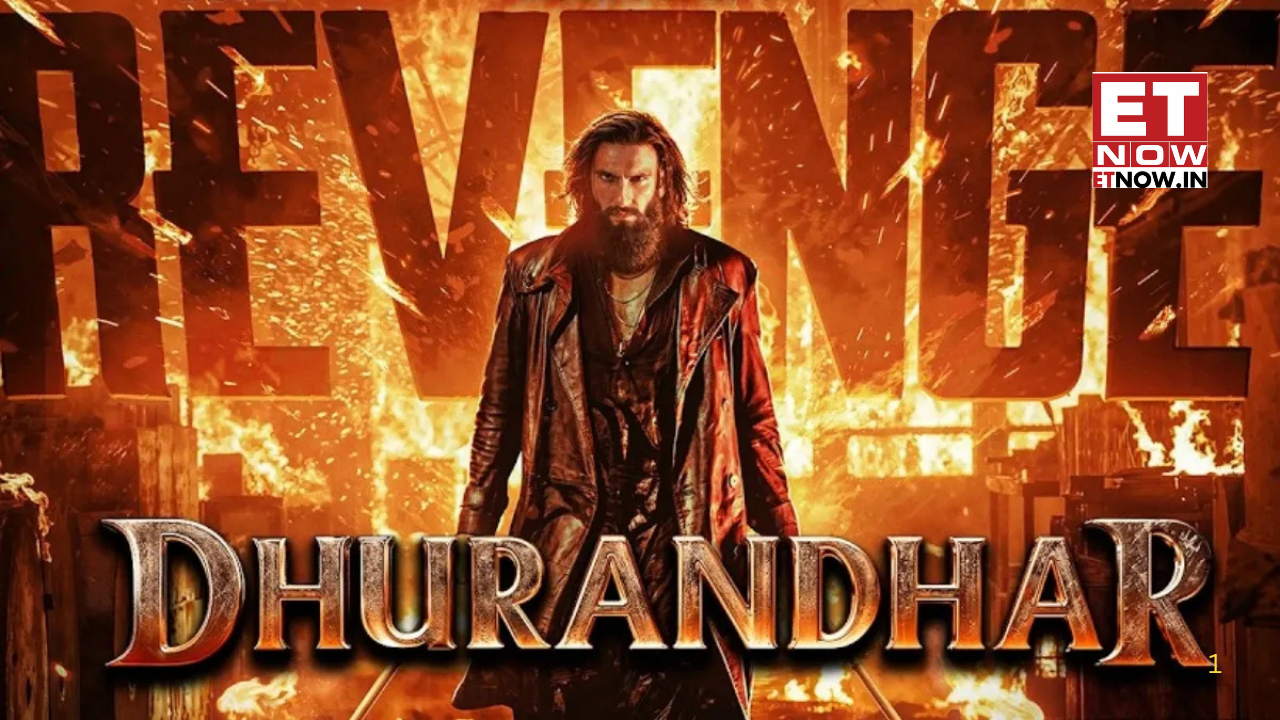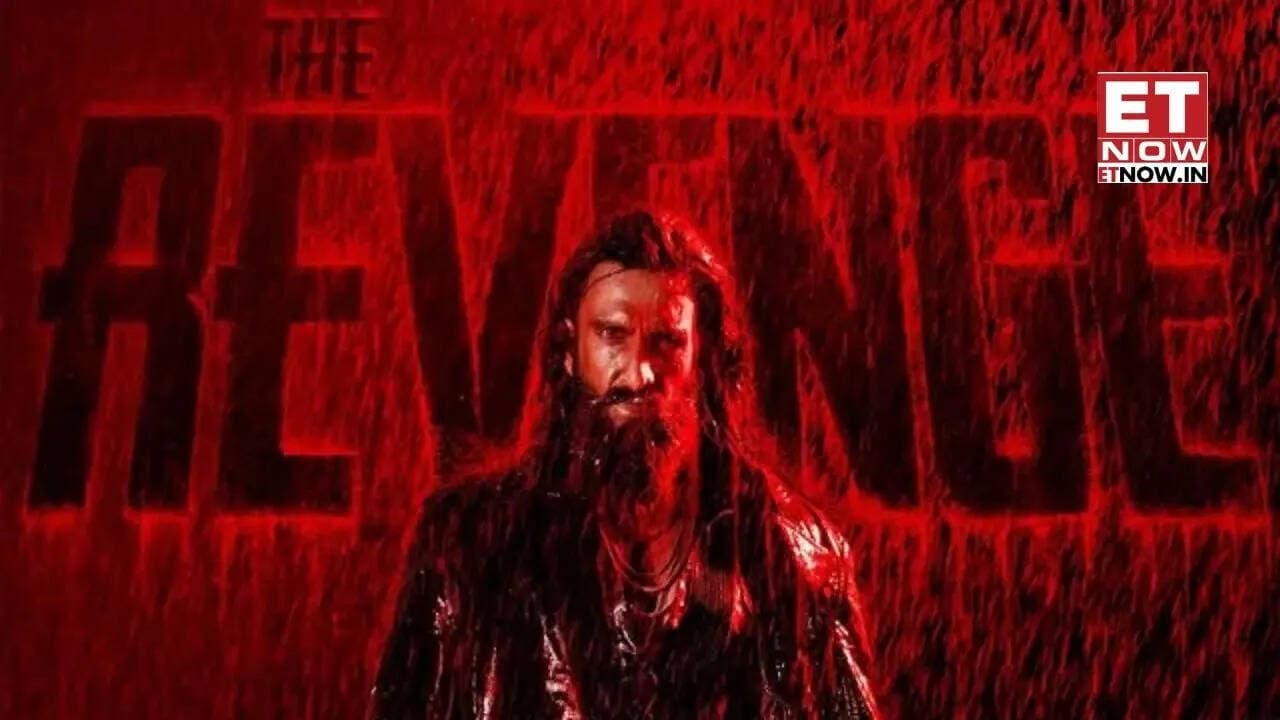
Dhurandhar: The Revenge Review — Aditya Dhar crafts a brutal, brilliant saga that refuses to let go
Dhurandhar The Revenge Review: There are films that aim to entertain, and then there are films that engulf you—Dhurandhar: The Revenge firmly belongs to the latter. Watching it in a packed theatre, with constant hooting, gasps, and stunned silences, I felt something rare: a film that doesn’t just unfold—it grips, questions, provokes, and ultimately lingers. Aditya Dhar returns not just as a director but as a storyteller who understands the pulse of his audience with startling precision. Even at a staggering runtime of 3 hours and 55 minutes, this is a cinematic experience that refuses to let go.Dhurandhar The Revenge Review: A Brutal Opening That Sets The ToneThe film begins in the year 2000, deep in the underbelly of Punjab’s drug smuggling nexus. It wastes no time establishing its tone. Jaskirat, accompanied by his friend, steps into a world that is already teetering on chaos—asking not just for drugs but for an AK-47. That single moment tells you everything: this is not a film that will hold your hand. Also Read: Dhurandhar 2 Day 1 Box Office Collection Live UpdatesFrom Pathankot, the narrative spirals into violence. Ranveer storms into a house, asking one question—“Where is my sister?”—and what follows is sheer carnage. I won’t reveal why he did what he did, but the emotional weight behind that brutality hits harder than the violence itself. The background score tightens every frame, amplifying tension without overwhelming it. It is raw, unapologetic, and not for the faint-hearted—and Aditya Dhar makes that clear from the very first act.Dhurandhar The Revenge Review: A Multi-Layered Narrative That Rewards PatienceThe storytelling is non-linear but never confusing. We move to 2004, where Jaskirat embarks on a mission, and then to 2022, where he appears as a RAW recruit. Dhar weaves timelines with confidence, trusting the audience to stay invested. Then comes 2009, and suddenly we are at Washma Butt’s tea shop—yes, the “namak ki chai” moment with Alam, played brilliantly by Gaurav Gera. It is these small, grounded details that make the world feel lived-in, even when the stakes are geopolitical.Is Rehman Dakait dead? I won’t reveal that. But the film thrives on such questions, planting seeds of curiosity that bloom much later.Power Struggles, Betrayals, And Characters That Stay With YouAs Arshad Pappu attempts to rise, Hamza dismantles his ambitions with chilling ease. Power dynamics shift constantly, and no character feels safe. Sanjay Dutt, as SP Chaudhary Aslam, is in terrifying form. He meets Arjun Rampal’s character and spins a fabricated story about Rehman’s death—a scene layered with manipulation and menace. Dutt oscillates between humour and fear so seamlessly that you are unsure whether to laugh or recoil.We are introduced to Rizwan, and questions multiply—who is he? Why is Hamza handing power to Uzair? Danish Pandor, as Uzair, is a revelation. His dialogue delivery, accent, and screen presence are pitch-perfect. He doesn’t just act; he inhabits the role.Rakesh Bedi’s Jameel offers much-needed comic relief, but even his humour carries an edge. You will find yourself laughing and uneasy at the same time—a delicate balance the film maintains throughout. What a performance!A Slow Burn That Pays OffThe first hour and a half is deliberately slow. It builds the world, establishes relationships, and plants narrative threads. Some may feel the need for tighter editing here—and I agree, the film could have been crisper—but this patience pays off in ways that are deeply satisfying.Football runs as a quiet metaphor in the background, while Sara’s Yalina introduces emotional stakes with her pregnancy and their son. But even here, nothing is as simple as it seems. Is Yalina a double agent? I won’t reveal that either—but be prepared to be surprised. Aditya Dhar’s Mastery In DirectionWhat stands out most is Dhar’s command over storytelling. He integrates real-world events with fictional narratives so seamlessly that the line between reality and cinema blurs. From PM Modi’s oath-taking ceremony to the Uri terrorist attack, the film doesn’t shy away from sensitive subjects. Instead, it contextualizes them within a larger narrative of a drug-terror nexus—how money generated within India is used to weaken it from within. It’s bold, thought-provoking, and disturbingly plausible.The Khalistani angle, the Pathan-Baloch conflict, Lyari burning—these are not just plot points; they are carefully constructed layers that add depth to the narrative.Characters That Reflect The Darkness Of RealityMajor Iqbal is one of the most disturbing characters in the film. His disdain for having a daughter and his horrifying pride in past atrocities make him deeply unsettling. And yet, he is portrayed with a chilling realism that makes you uncomfortable in the best way. Hamza’s transformation into Sher-e-Baloch is equally compelling. His entry, mirroring Akshaye Khanna’s in the “FASLA” song from the first part, is one of those moments that draws whistles and applause.Then comes the question—who is “bade sahab”? The suspense builds gradually, and when the reveal comes, it is not what you expect. The imagery of his white mansion filled with lions is symbolic, almost mythical. He is the mastermind behind it all—and yes, you will likely guess, but the confirmation still hits hard.Music, Background Score, And CinematographyThe background score deserves special mention. It doesn’t just accompany the film; it elevates it. Every action sequence, every emotional beat, every moment of tension is amplified by a score that understands restraint and impact. Songs like “Didi” and “Tamma Tamma” are used strategically, not as fillers but as narrative devices. They add rhythm without breaking immersion.Cinematographically, the film is stunning. From the dusty lanes of Punjab to the chaos of Lyari, every frame feels authentic. The camera doesn’t shy away from brutality, yet it never feels exploitative. It observes, captures, and lets the audience feel.Real Events, Reimagined With ImpactThe film references several real incidents and figures—Zayed Akhund aka Zahoor Mistry, the Kandahar hijack, the Babri Masjid angle, demonetisation on November 8, 2016. It ties them together in a way that makes you rethink what you thought you knew.The sequence involving Zahoor Mistry’s fate, after 23 years, is one of the most goosebump-inducing moments. When that “Bharat Mata ki Jai” echo returns, the theatre erupts—and rightly so. You see names, operations, and outcomes—Abdul Rahman Makki, Amarjit Singh, Mohammad Riyaz, Abu Qasim, Bhatkal—and suddenly, headlines you once skimmed begin to form a larger, chilling picture.Emotional Depth That Catches You Off GuardFor all its action and political commentary, the film is deeply emotional. The beginning of the second half is devastating. Without revealing too much, it changes the tone entirely.You will cry. Not because the film forces you to, but because it earns it.Hamza’s journey, his past, and the people connected to him unravel in ways that are both tragic and inevitable.Twists, Suspense, And An Ending That Leaves You Wanting MoreSP Aslam Chaudhary begins to suspect Hamza, and from here, the tension escalates. Identities are questioned, loyalties shift, and nothing is certain.Is Yami Gautam in the film? I won’t reveal that—but Dhar’s knack for unexpected twists is very much intact.And just when you think the story is closing, a new question emerges—if everyone is dead, then who is after Hamza? The answer is something you won’t see coming.Final Verdict: A Theatrical Experience You Cannot MissDhurandhar: The Revenge is not a perfect film. Its length could have been trimmed, especially in the first half. But these are minor quibbles in the face of what it achieves. Aditya Dhar proves once again that he understands his audience—what they want, what will move them, and what will stay with them long after the credits roll. This is a film that demands to be watched in a theatre. The collective experience—the hooting, the claps, the silence—is an integral part of its impact. I walked out of the theatre overwhelmed, disturbed, and deeply impressed.What a film.And yes—this is a must watch. Watch it in theatres.Because some films aren’t meant to be watched — they’re meant to be felt.DO NOT MISS THE ENDING ***Cast: Ranveer Singh, Sanjay Dutt, Sara Arjun, Arjun Rampal, Saumya Tandon, Rakesh Bedi, R. Madhavan, Danish PandorLanguages: Hindi, Telugu, TamilDirector: Aditya DharRuntime: 3 hours 55 minutesRating: ⭐⭐⭐⭐.5/5 (4.5/5)